Amy Acted Fast
At CPR Choice, we often say two things in our classes that stick with people:
-
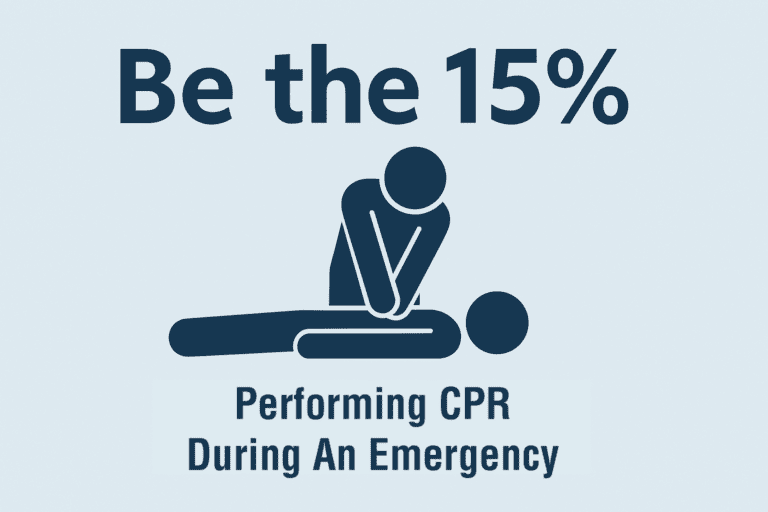
85% of people will choose not to help in a medical emergency.
-
Most emergencies happen “in the wild”—meaning, not in a hospital or controlled environment, but out in everyday life.

This past week, CPR Choice instructor, Amy Carlisle, proved both of these statements true—and reminded us exactly why we do what we do.
While driving home from an afternoon with friends, Amy noticed something odd on a normally busy four-lane road near her home. A car sat stopped in the slow lane, hazard lights blinking. One by one, cars merged into the fast lane and passed without stopping. But Amy noticed two men in the ditch—one slumped over, and the other appearing to hit him on the back. It didn’t look right.
Amy pulled over immediately. Another nurse and her husband happened to be behind her and also stopped. The woman jumped out and began abdominal thrusts, as the man’s son said he had choked while eating lunch after a cardiology appointment. But it was clear the situation was dire—the elderly man was unconscious, gray, and not breathing.
Amy acted fast. She called 911 and began the steps of CPR. Remembering she had just taught a class and had first aid kits in her car, she quickly retrieved a hard mask and knew that a flat surface would be vital for effective compressions. With the help of arriving police officers, they moved the man onto the road. The officers administered Narcan as a precaution, and CPR began in earnest—compressions and rescue breaths.
Quick Thinking and Confident Action
Moments later, they had a pulse.
Amy and the team rolled the man into the recovery position just in time—he vomited and began to regain color. By the time EMS arrived, he was breathing on his own, though not yet fully alert. But he was alive.
We may never know exactly what triggered the incident, or what the man’s recovery looks like. But we know this: Amy’s quick thinking and confident action saved his life.
As Amy reflected on the situation, she said:
“To me, this is the hard part of being a first responder instead of a nurse in the hospital. I don’t get an update on his condition, and I don’t have the ability to check on his family. But I can keep teaching CPR—and keep reminding people how important it is to be part of the 15% who step in during a crisis.”
We are incredibly proud of Amy and the countless other instructors and students who don’t just talk about making a difference—they live it. This is exactly why CPR Choice exists: to empower people with the skills and confidence to act in emergencies.
Will you be part of the 15%?