When it comes to saving a baby’s life, every second — and every compression — matters. The latest guidance from leading resuscitation organizations, including the International Liaison Committee on Resuscitation (ILCOR), the American Heart Association (AHA), the American Red Cross, and HSI, has updated how rescuers should perform infant chest compressions. If you learned infant CPR in the past using only two fingers, it’s time to learn what has changed — and why it can make the difference between life and death.
Related: Bobby Bones Gets CPR Certified Before Baby Arrives
The Big Change: From Two Fingers to More Effective Compressions
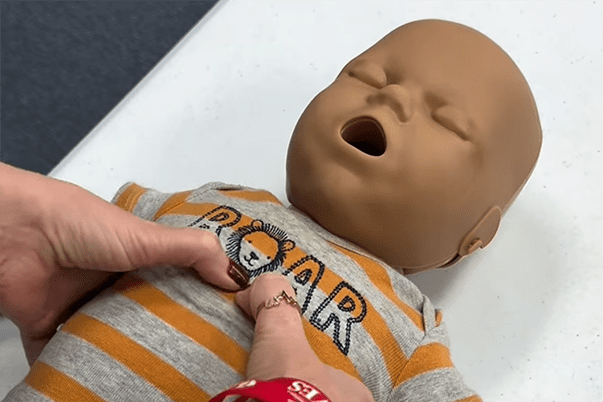
For many years, rescuers were taught to use two fingers for infant chest compressions. While still acceptable in some situations, the newest recommendations emphasize techniques that create better blood flow to the brain and vital organs:
Heel of One Hand Technique (Single Rescuer Option)
Place the heel of one hand in the center of the chest, on the sternum (breastbone), between the nipples.
Encircling Thumbs Technique (Preferred for Two Rescuers)
Place both thumbs side-by-side on the center of the chest while your hands encircle the infant’s torso, supporting the back. This method often produces stronger, more consistent compressions and improved circulation.
Why the change? Research shows that these techniques can produce better depth, more consistent pressure, and improved blood flow, which increases the chances of survival and better neurological outcomes.
Compression Depth and Rate: The Lifesaving Numbers
To be effective, compressions must be done correctly:
Depth: About 1.5 inches (4 cm) — or one-third the depth of the infant’s chest
Rate: 100–120 compressions per minute
Allow full chest recoil between compressions
Minimize interruptions
Many rescuers — especially parents — worry about pressing too hard and hurting the baby. The reality is this: if you do not compress deep enough, you will not circulate blood effectively. Without blood flow, the brain is deprived of oxygen and the infant will not survive. When a baby is in cardiac arrest, chest compressions are not optional — they are lifesaving.
Chest Compressions Are Used in More Than Cardiac Arrest
Chest compressions are also critical when an infant becomes unresponsive during a severe choking (foreign body airway obstruction) emergency. High-quality compressions help move oxygenated blood and may help dislodge the obstruction when combined with proper choking rescue techniques.
Hand Placement Matters
Always place your hand (or thumbs) directly in the center of the chest on the sternum, between the nipples. Correct placement ensures effective compressions while reducing the risk of injury.
Learn the Latest — Because Guidelines Change
CPR science continues to evolve as new research improves how we save lives. At CPR Choice, we are committed to teaching the most current, evidence-based guidelines from ILCOR, AHA, Red Cross, and HSI. Our instructors ensure parents, caregivers, and professionals feel confident, prepared, and capable of acting in an emergency.
Because when it comes to a child’s life, confidence and correct technique save lives.
Learn, practice, and get certified in performing adult, child, and infant CPR.
Sign up for an all ages CPR class today!
Watch our new video to see the updated infant CPR compression techniques in action and learn how you can be prepared to respond when every second counts.
Watch on Tiktok
Watch on Instagram
Watch on YouTube