Comprehensive Guide to AEDs

Choosing the Right AED
Home » The Pulse » Comprehensive Guide to AEDs
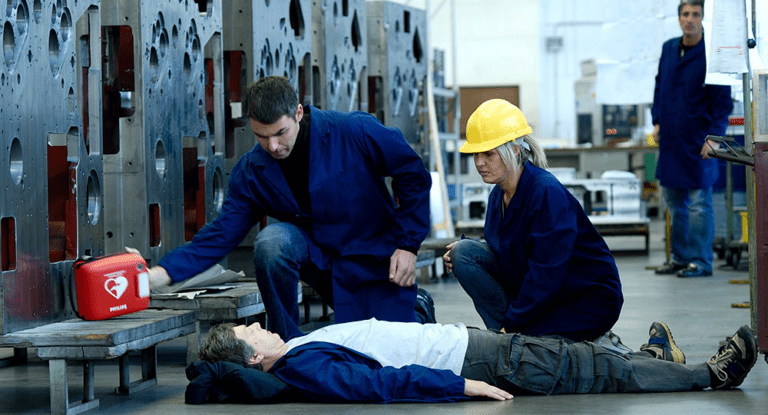
AED industrial lifesaving action
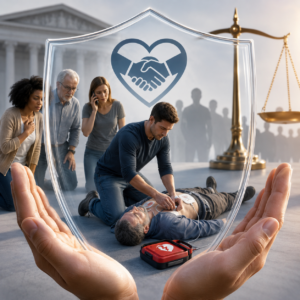
"An AED is a life-saving device that’s easy to use, and Good Samaritan Laws protect you when you help."

What is an AED?

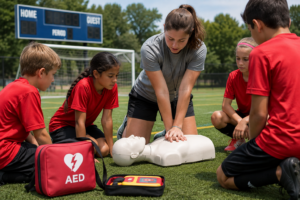
An Automated External Defibrillator (AED) is a life-saving medical device designed to correct the heart rhythm of a sudden cardiac arrest victim. It is a computerized device that analyzes the heart rhythm and, if necessary, delivers an electric shock to help the heart re-establish an effective rhythm. AEDs are designed to be simple to use, with step-by-step audio and visual prompts. If you can operate a smartphone, you can operate an AED. If you’ve ever followed an automated phone menu or played with stickers as a child, you can confidently use an AED.

How to Use an AED:

  1. Turn on the AED – This starts the voice prompts.
  2. Expose the Chest – Ensure the chest is bare for electrode pad placement.
  3. Apply Pads – Follow the pictures on the pads for proper placement.
  4. Let the AED Analyze – Say “Clear” and ensure no one is touching the patient.
  5. Deliver Shock if Advised – Press the flashing shock button.
  6. Continue Following Prompts – Continue CPR as instructed by the AED.

FAQs:

  • Can I accidentally shock someone? No, the AED only delivers a shock if the button is flashing, indicating a shockable rhythm.
  • Can the AED shock me? Only if you are touching the patient during the shock delivery.
  • Can I hurt the patient by using the AED? No, AEDs are designed to support life, and any injuries are non-life-threatening.
  • Do I need certification to use an AED? While some states require certification, AED Choice recommends training for confidence but does not require it for usage.


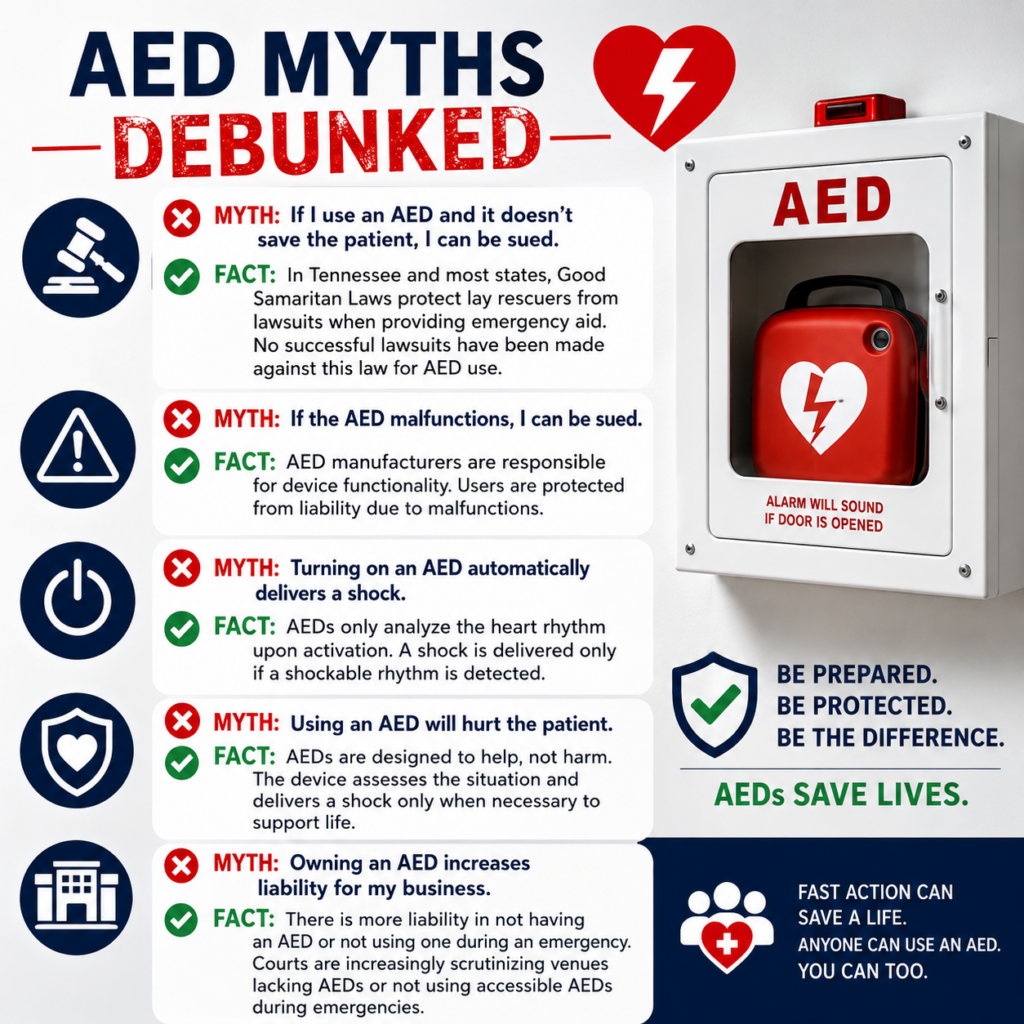
AED Myths – Debunked

  1. Myth: If I use an AED and it doesn’t save the patient, I can be sued.
    • Fact: In Tennessee and most states, Good Samaritan Laws protect lay rescuers from lawsuits when providing emergency aid. No successful lawsuits have been made against this law for AED use.
  2. Myth: If the AED malfunctions, I can be sued.
    • Fact: AED manufacturers are responsible for device functionality. Users are protected from liability due to malfunctions.
  3. Myth: Turning on an AED automatically delivers a shock.
    • Fact: AEDs only analyze the heart rhythm upon activation. A shock is delivered only if a shockable rhythm is detected.
  4. Myth: Using an AED will hurt the patient.
    • Fact: AEDs are designed to help, not harm. The device assesses the situation and delivers a shock only when necessary to support life.
  5. Myth: Owning an AED increases liability for my business.
    • Fact: There is more liability in not having an AED or not using one during an emergency. Courts are increasingly scrutinizing venues lacking AEDs or not using accessible AEDs during emergencies.


Good Samaritan Laws – Protection for AED Users

What Are Good Samaritan Laws?
Good Samaritan laws provide legal protection to bystanders who offer emergency assistance without compensation. Every state has its own version of this law, but generally, they:

  • Cover spontaneous, uncompensated aid.
  • Reduce the standard of care required under normal circumstances.
  • Provide immunity from civil liability for ordinary negligence.
  • Note: These laws do not protect against gross negligence or willful misconduct.

Who Is Covered?

  • Lay rescuers who act in good faith and within the scope of their training.
  • Volunteers not compensated for their aid.
  • Not Covered: On-duty medical professionals, pre-arranged volunteers, or those with a legal duty to respond.

Key Takeaway:
If you act in good faith and in the victim’s best interest, Good Samaritan protections are solid. You may be sued, but the law generally protects you from a successful lawsuit.


Where Should AEDs Be Placed?

The effectiveness of an AED largely depends on its accessibility. To maximize the life-saving potential, AEDs should be placed where they can be retrieved and used within one minute. Here are some considerations:

  1. Central Location: Place the AED in a central, visible area that is easily accessible.
  2. High-Risk Areas: Identify areas with high foot traffic or physical activity where cardiac emergencies are more likely.
  3. Well-Staffed Zones: Place AEDs in areas with regular staff presence to ensure prompt response.
  4. Visibility and Security:
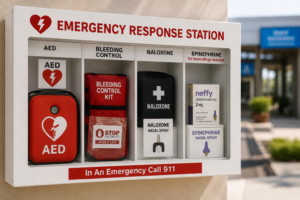
    • Wall-mounted cabinets increase visibility.
    • Consider cabinets with alarms for added security and awareness.
    • Place near security cameras if possible.
    • Ensure no locked doors obstruct access.

Examples of Optimal AED Locations:

  • Sports arenas, airports, schools, manufacturing facilities, gyms, office buildings, concert venues, malls, and community swimming pools.
  • In private residences, especially for families with a history of heart disease.


Who Should Have an AED?

Anywhere there are masses of people, an AED should be present. Simple math shows that more people in one place increase the likelihood of a cardiac emergency. Examples include:

  • Public Places: Sports arenas, airports, malls, concert venues, movie theaters, tourist attractions, and convention centers.
  • Workplaces: Factories, manufacturing facilities, office buildings, gyms, hotels, restaurants, and schools (K–College).
  • Community and Transportation: Police vehicles, buses, subways, apartment complexes, community swimming pools, and daycares.
  • Homes: AEDs are becoming more common in homes, especially for families with a history of cardiac issues. Portable models provide peace of mind both at home and during travel.


How to Buy an AED

Choosing the right AED involves balancing cost, features, and supporting science. Follow these steps:

  1. Research and Compare: Watch video tutorials and presentations for different AED brands. AED Choice offers demos of three top brands.
  2. Consult an Expert: Schedule a visit with a local account representative to see the devices firsthand.
  3. Quality Assurance: Check for FDA recalls. Pay more attention to involuntary recalls, as they indicate serious safety concerns.
  4. Decision-Making: Involve other decision-makers for additional perspectives.
  5. Invest and Train: Once you’ve chosen your AED, invest in staff training for operation, maintenance, and location awareness.


Which AED is the Right Choice?

The best AED depends on the environment and the users:

  1. Business Environments:
    • Safe, quiet areas with low risk of damage.
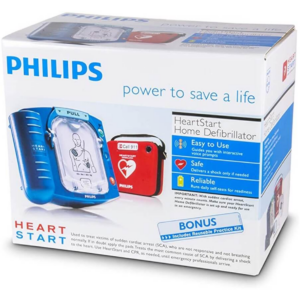
    • Recommended Models: Philips Onsite, Medtronic CR+, Samaritan Heartsine, Zoll AED Plus, Defibtech Lifeline, and Cardiac Science Powerheart G3.
  2. Construction/Manufacturing/Factory Settings:
    • High-risk areas with loud and dirty environments.
    • Recommended Features: High decibel alerts, LED text prompts, and durability for rough handling.
    • Recommended Models: Philips FRx, Medtronic LifePak 1000, Zoll AED Pro, Cardiac Science Powerheart G5, and Lifeline VIEW/ECG/PRO AED.
  3. Aviation and Transportation:
    • Requires FAA-approved batteries.
    • Look for models specifically labeled for aviation use.

General Tips:

  • Consider the users’ needs, including visual or hearing impairments.
  • Wall-mounted AEDs are ideal for visibility and accessibility in public areas.
  • Ensure regular maintenance and employee training for optimal readiness.


Final Thoughts

Investing in an AED is a proactive step towards safety and saving lives. Whether you are a business owner, community leader, or concerned family member, an AED is a valuable asset. Knowing how to use one is just as important as owning one. At CPR Choice, we not only provide AEDs but also offer comprehensive training to ensure you feel confident and prepared to use this life-saving device.

For more information, training, or to purchase an AED, visit our Shop AEDs store.

Share Post:

Learn CPR – Enroll in a Class Today!

Enroll in our comprehensive BLS, ACLS, PALS, CPR, AED, and First Aid classes to gain essential lifesaving skills and be prepared for any emergency.

Trusted By

Proudly serving businesses, schools, and organizations that prioritize safety.
From small businesses to national brands, we’re the trusted choice for expert CPR training and lifesaving solutions.