Child Choking First Aid: What Every Parent and Caregiver Must Know
Choking is one of the leading causes of death in young children, yet many tragedies are preventable with fast, confident action. Knowing how to respond when a child is choking can save a life. In one of our latest training videos, CPR Choice demonstrates the newest choking rescue recommendations supported by ILCOR, the American Heart Association (AHA), Red Cross, and HSI — including an important update many people may not realize has changed.
This guide covers how to recognize choking, what to do, and when CPR is needed.
How to Recognize Severe Choking in a Child
A child (approximately age 1 through toddler/walking age) is experiencing severe airway obstruction if they:
- Cannot cough effectively
- Cannot speak or cry
- Cannot breathe or make noise
- May turn blue (cyanosis), especially around lips and face
If a child can cough, encourage strong, forceful coughing and monitor closely. Do not interfere unless breathing becomes ineffective.
New Choking Rescue Recommendation: Back Blows + Abdominal Thrusts
For many years, rescuers were taught to perform only abdominal thrusts (Heimlich maneuver). Updated 2025 guidelines now recommend a combination approach:
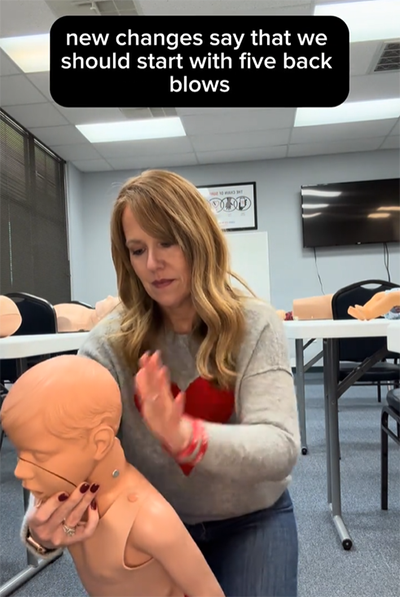
Step 1: 5 Back Blows
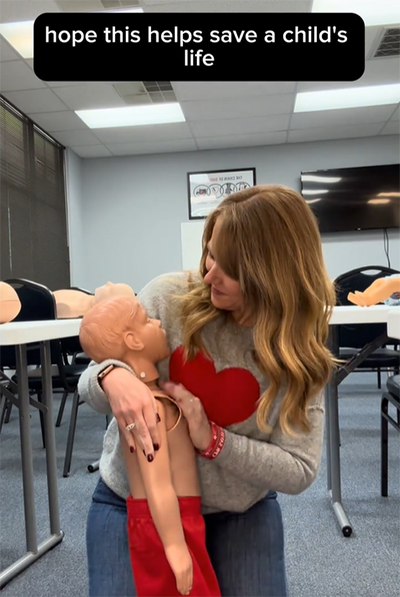
- Support the child and position them leaning forward (gravity helps)
- Deliver 5 forceful back blows using the heel of your hand
- Strike between the shoulder blades
Step 2: 5 Abdominal Thrusts
- Place your fist just above the belly button
- Perform quick inward and upward thrusts in a “J-shaped” motion
- Use controlled but firm force
Repeat
Continue cycles of 5 back blows and 5 abdominal thrusts until:
- The object is expelled, OR
- The child becomes unconscious
Even if the object comes out and the child seems fine, follow up with a physician to ensure no injury or remaining obstruction.
If the Child Becomes Unconscious
If the airway remains blocked, a child will eventually lose consciousness. If this happens:
Begin CPR Immediately
- Start with 30 chest compressions
- Compression depth: about 2 inches (one-third chest depth)
- Rate: 100–120 compressions per minute
Check the Mouth Before Breaths
- Look for a visible object
- Remove only if clearly seen
- Never perform blind finger sweeps
Give 2 Breaths
- Watch for chest rise
- Chest rise confirms the airway is open and breaths are entering
Continue CPR until:
- The object is removed
- The child begins breathing
- EMS takes over
Why This Matters
Choking cuts off oxygen to the brain. Within minutes, this becomes life-threatening. Quick, correct action restores airflow and circulation, dramatically increasing survival and reducing brain injury.
Many parents fear hurting their child while performing thrusts or compressions — but without enough force, the obstruction will not clear. In a choking emergency, effective action saves lives.
Prevention: Check for Choking Hazards
Because choking is common and often preventable:
- Inspect your home for small objects
- Avoid foods that commonly cause choking (grapes, hot dogs, hard candy, nuts, popcorn)
- Cut food into small, safe pieces
- Supervise young children while eating and playing
(Watch our companion video on common choking hazards to help make your home safer.)
Learn to Respond with Confidence
At CPR Choice, we teach the most current, evidence-based choking rescue and CPR techniques from ILCOR, AHA, Red Cross, and HSI. All of our open enrollment CPR classes include infant CPR, child CPR, and choking rescue training, giving parents and caregivers the skills and confidence to act when seconds matter.
Because when a child cannot breathe — you are their lifeline.
Watch our Child Choking Rescue video to see these updated techniques demonstrated step-by-step and learn how to respond confidently in an emergency.
Our child choking demonstration has helped educate millions of viewers on TikTok and is also available on Instagram and YouTube.