
Raising Awareness and Saving Lives
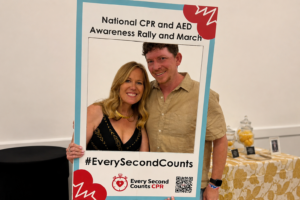
CPR Choice co-owners Cheryl and Travis Smith joined survivors, advocates, educators, and industry leaders in Washington, D.C., for three days of CPR training, AED awareness, remembrance, and national advocacy.
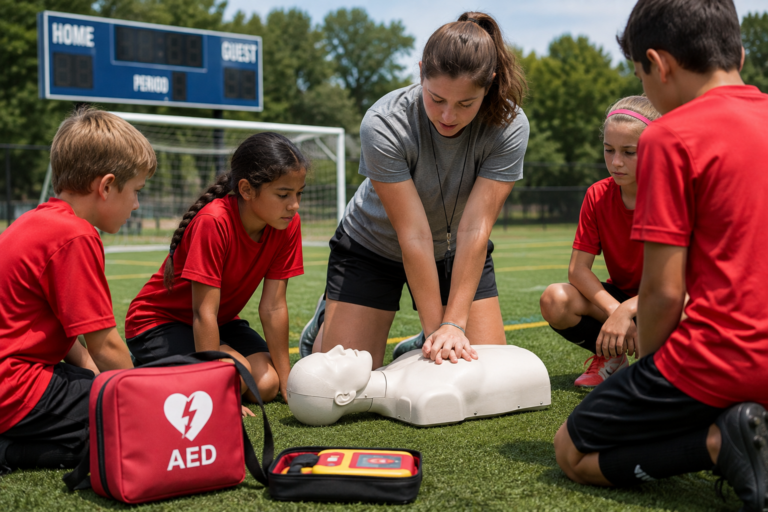
When we sign our kids up for sports, we think about cleats, uniforms, physicals, hydration and injury prevention. But there is another question every parent, coach, school and youth sports organization should be asking:
“Are we prepared for a cardiac emergency?“
Sudden cardiac arrest in a young athlete is rare, but when it happens, the response has to be immediate. In fact, the American Heart Association identifies sudden cardiac arrest as the leading cause of death among student-athletes, with a large percentage of cases occurring in sports such as basketball, football and soccer.
Protecting young athletes isn’t about relying on one test, one piece of equipment or one trained person.
It requires layers of protection:
Most young athletes undergo some type of pre-participation sports physical. These exams are important and should include a careful personal and family cardiac history as well as a physical examination.
But some potentially dangerous heart conditions may exist in athletes who look and feel perfectly healthy.
An electrocardiogram, commonly called an EKG or ECG, records the electrical activity of the heart. It can sometimes identify abnormalities associated with conditions that may increase an athlete’s risk of sudden cardiac arrest, including certain electrical disorders and cardiomyopathies.
Current American Heart Association and American College of Cardiology guidance recognizes that adding a 12-lead ECG to an athlete’s standard history and physical can be reasonable when there is appropriate expertise to interpret athletic ECGs and adequate resources for follow-up testing when necessary.
That does not mean an EKG catches every heart condition or that every abnormal EKG means something is wrong. False positives and false negatives can occur, which is why athlete EKGs should be interpreted by appropriately qualified medical professionals. The AHA currently does not recommend mandatory universal EKG screening of every young athlete.
But it does mean EKG screening deserves to be part of the conversation about youth sports safety—particularly when there are concerning symptoms, abnormal findings or a significant family history.
Parents should also take questions on sports physical forms seriously. A history of fainting or near-fainting during exercise, unexplained chest pain with exertion, unusual shortness of breath, heart palpitations or a family history of sudden unexplained death or serious heart disease should never simply be checked off and forgotten.
There is another important reason cardiac emergency preparedness matters even when athletes have been screened:
Not every cardiac arrest is caused by an underlying condition that could have been detected beforehand.
Damar Hamlin’s nationally televised cardiac arrest in January 2023 is perhaps the most recognizable example.
Hamlin later said his cardiac arrest was caused by commotio cordis, an extremely rare event in which a sudden impact to the chest occurs at a vulnerable moment in the heart’s electrical cycle and triggers a life-threatening rhythm.
Commotio cordis is not caused by underlying heart disease, so a normal physical or EKG beforehand would not prevent it.
What saved Damar Hamlin was something every youth sports organization can learn from:
People recognized the emergency. CPR began. A defibrillator was available. And there was an organized emergency response.
Our kids may not be playing in an NFL stadium surrounded by medical professionals.
That is exactly why preparation at the community level matters so much.
An Automated External Defibrillator (AED) is designed to analyze a person’s heart rhythm and deliver a shock when a shockable rhythm is detected.
AEDs are intentionally designed so that trained laypeople can use them.
Having an AED somewhere in a building is not enough.
At a soccer complex, basketball gym, baseball field or football stadium, ask:
Where is the AED?
How quickly can someone get it to the athlete?
Is it unlocked and accessible during practices as well as games?
Do coaches and staff know where it is?
Has someone checked the battery and electrode pads?
What happens when the team travels to another facility?
The American Heart Association specifically recommends keeping AEDs at athletic and recreational facilities and emphasizes rapid CPR and AED use when cardiac arrest occurs.
An AED that takes several minutes to locate—or is locked in an office nobody can access—is not truly an accessible AED.
For leagues, schools, gyms, churches, recreation centers and athletic facilities evaluating AED purchases, think beyond simply buying the device. Placement, accessibility, maintenance, replacement pads and batteries, staff training and integration into an emergency response plan all matter.
An AED is an extraordinary lifesaving tool, but someone still has to recognize the emergency, call 911, begin CPR, retrieve the AED and use it.
That’s why CPR and AED training for coaches, athletic staff, teachers, volunteers and parents should be a fundamental part of youth sports safety.
When an athlete suddenly collapses and is unresponsive and not breathing normally—or is only gasping—cardiac arrest should be considered immediately.
This is not the time to wait several minutes to see whether the athlete “comes around.”
The American Heart Association’s own youth sports training initiatives emphasize teaching athletes, coaches, officials and parents how to perform CPR and use an AED.
CPR training gives people the confidence to act instead of standing on the sidelines wondering what to do.
Buying an AED and sending a few coaches to CPR class is an excellent start—but the safest organizations take another step.
They develop a Cardiac Emergency Response Plan, or CERP.
A CERP answers critical questions before the emergency happens:
The American Heart Association emphasizes that a Cardiac Emergency Response Plan should establish a coordinated response that includes recognizing cardiac arrest, activating emergency medical services, beginning CPR and quickly retrieving and using an AED.
And simply putting the plan in a binder isn’t enough.
Practice it.
Run cardiac emergency drills just like schools practice fire drills. Walk from the farthest athletic field to the AED. Time how long retrieval takes. Make sure coaches know how EMS will enter the facility.
A plan that has never been practiced may not work the way you expect when someone’s life depends on it.
The conversation about sudden cardiac arrest in youth sports sometimes gets reduced to one question:
“Should every athlete get an EKG?”
That’s too narrow.
We should absolutely continue the conversation about improving cardiovascular screening and making appropriate EKG screening more accessible.
But even the most comprehensive screening program will never identify or prevent every cardiac arrest.
That’s why prevention and emergency preparedness have to work together.
Screen when appropriate.
Pay attention to warning signs and family history.
Train coaches and staff in CPR and AED use.
Make AEDs immediately accessible.
Develop and practice a Cardiac Emergency Response Plan.
Because when a young athlete collapses, the question shouldn’t be:
“Does anybody know what we’re supposed to do?”
Everyone should already know.
CPR Choice provides CPR and AED training for schools, athletic programs, coaches, businesses and community organizations. We can help your organization build the skills and confidence to respond when seconds matter.
We also assist organizations with AED purchases, AED placement and ongoing AED maintenance, so purchasing a defibrillator is not the end of your preparedness plan—it’s the beginning.
If you’re responsible for a school, youth sports organization, recreation facility, gym, church or community program, start with three questions today:
Where is our AED?
Who here knows CPR?
What is our cardiac emergency response plan?
If you don’t have good answers to all three, now is the time to change that.
 CPR Choice
CPR Choice co-owners Cheryl and Travis Smith joined survivors, advocates, educators, and industry leaders in Washington, D.C., for three days of CPR training, AED awareness, remembrance, and national advocacy.

John Moon joined Freedom House Ambulance Service in Pittsburgh in 1972. Freedom House, which was staffed primarily by Black men and women from Pittsburgh’s Hill District, is widely recognized as one of America’s first modern advanced life-support ambulance services.
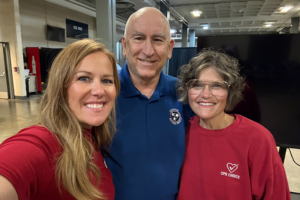
CPR Choice was honored to welcome Senator Briggs to our booth during the event. We had the opportunity to discuss the importance of CPR education, community preparedness, AED accessibility, and the role training plays in improving survival outcomes during cardiac emergencies.
Enroll in our comprehensive BLS, ACLS, PALS, CPR, AED, and First Aid classes to gain essential lifesaving skills and be prepared for any emergency.












Proudly serving businesses, schools, and organizations that prioritize safety.
From small businesses to national brands, we’re the trusted choice for expert CPR training and lifesaving solutions.